By Louis Balla, CRO at Nuage
Updated October 2026

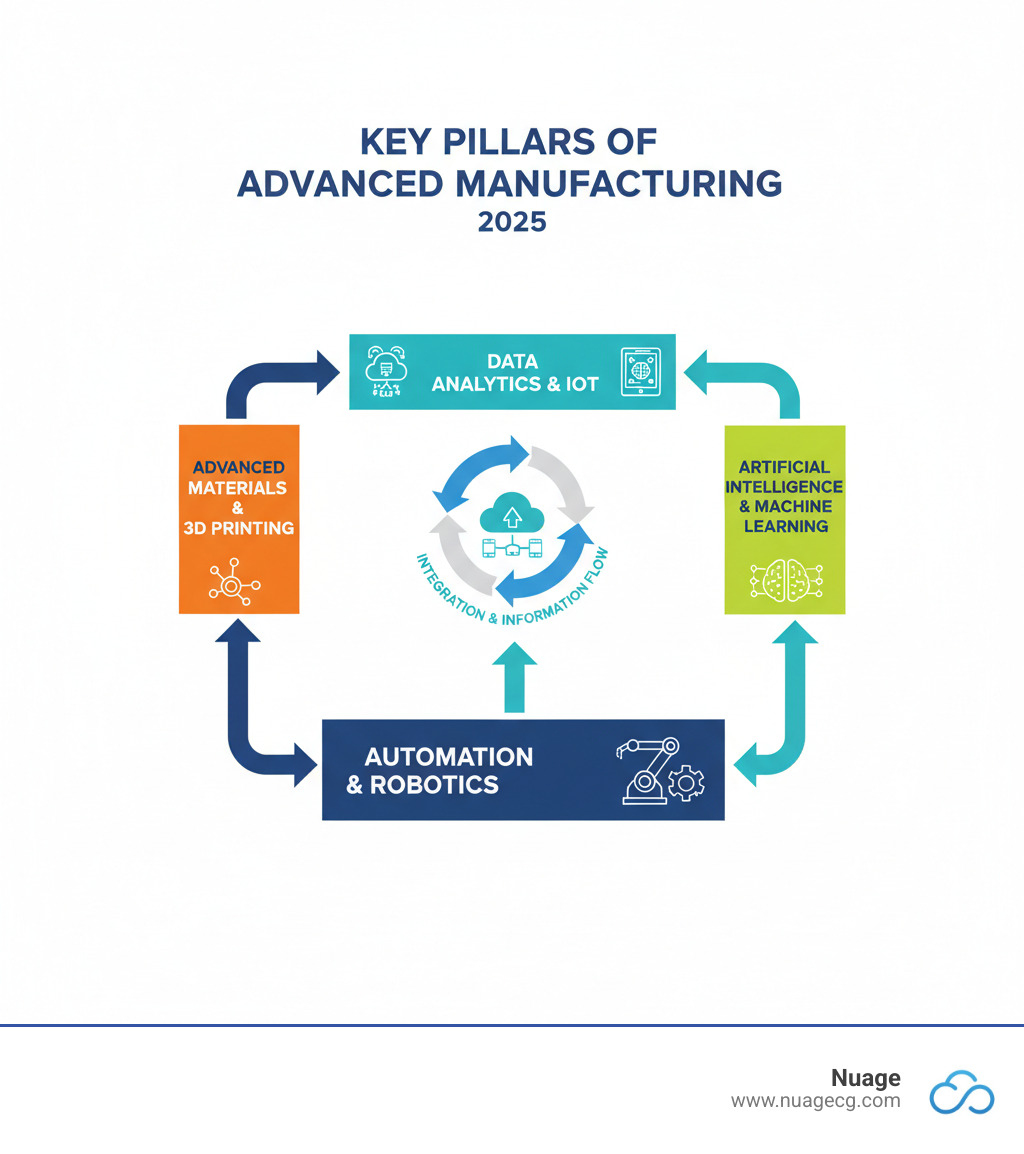
Advanced manufacturing is the use of innovative technology to improve how products are designed and made. It includes 3D printing, robotics, sensors, AI and the software that plans and tracks production. The goal is better products made with less waste and shorter lead times than manual, sequential methods allow, with data connecting each step.
This guide covers the definition and the main technologies, then examples by industry and what it takes to run the operation. Nuage helps manufacturers run NetSuite, including the bill of materials and production planning work behind the shop floor, and the later sections draw on that delivery work.
What is advanced manufacturing?
Advanced manufacturing focuses on using innovative technology to design and make products. The term covers new equipment on the shop floor and the information systems that connect it, from product design to delivery. You will also see it called Industry 4.0 or the smart factory, although smart manufacturing is a narrower term, explained in the FAQ below.
Most definitions share these characteristics:
- Connected equipment: robots, sensors and automated machines that report what they are doing.
- Data-driven decisions: production and maintenance decisions made from live machine and inventory data.
- Flexible production: shorter runs and customized products without retooling a whole line.
- Less waste: precise processes and additive methods that use only the material a part needs, along with lower energy use from monitored equipment.
- A skilled workforce: technicians who program and maintain automated systems.
The practical aim is to shorten lead times and cut waste without giving up quality, so a plant can respond faster when demand or product requirements change.
Advanced manufacturing vs. traditional manufacturing
Traditional manufacturing relies on mass production of standard products on sequential lines, with investment focused on plants and machinery. Advanced manufacturing puts more of the investment into software and workforce training, so the same plant can handle more product variation.
| Feature | Traditional manufacturing | Advanced manufacturing |
|---|---|---|
| Production strategy | Mass production of standard products | Customization and rapid prototyping |
| Labor and skills | Manual work, on-the-job training | Technical roles that program and maintain automated equipment |
| Investment focus | Plants and machinery | Digital systems and workforce training |
| Planning and logistics | Fixed schedules, local suppliers | Real-time tracking of materials and orders across the supply chain |
Advanced manufacturing processes and equipment
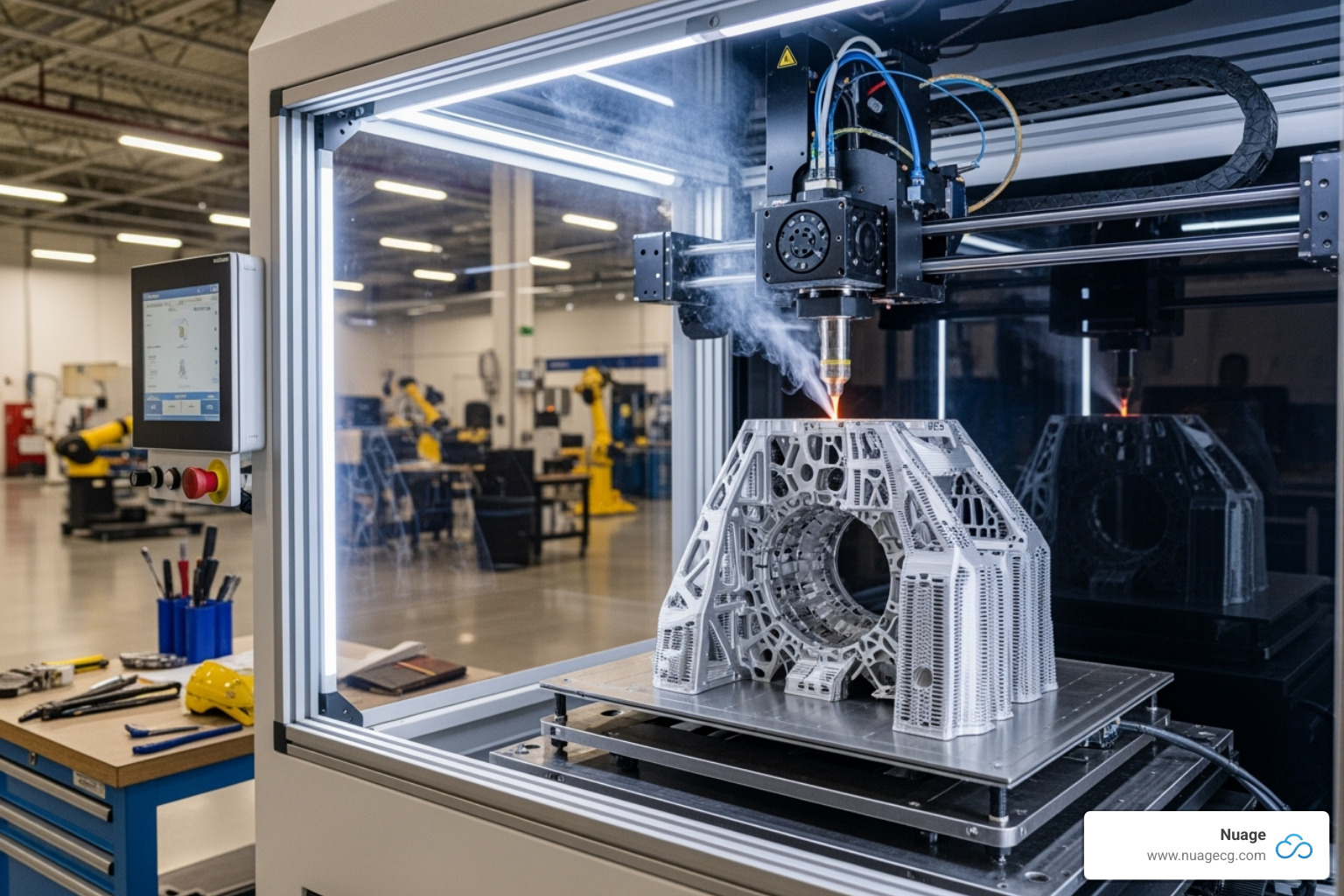
These technologies can be adopted one at a time, and they do the most when they share data with each other and with the system that plans production.
Additive manufacturing (3D printing)
Additive manufacturing builds a part layer by layer from a digital design, where machining cuts material away from a solid block. It is used for rapid prototyping and for complex or lightweight parts that are hard to machine. Because no retooling is needed, short runs of customized parts become affordable. In the U.S., America Makes, the National Additive Manufacturing Innovation Institute, coordinates research in this area.
Robotics and automation
Industrial robots take on repetitive and hazardous tasks such as welding, painting, palletizing and precision assembly. Collaborative robots, or cobots, are built to work safely next to people, for example holding a part steady while a technician fastens it. As automation grows, more shop floor jobs involve programming robots and keeping them running.
Industrial IoT and sensor data
Sensors on machines report temperature, vibration, cycle counts and output in real time. That data feeds alerts and digital twins, which are virtual models of a machine or a line used to test changes before making them on the floor. Tracking materials the same way gives purchasing and planning an accurate picture of what is on hand and what is in process.
Artificial intelligence and machine learning
- Predictive maintenance: models read sensor data to flag equipment likely to fail, so repairs can be scheduled before a breakdown.
- Quality inspection: machine-vision systems check parts for defects at line speed.
- Process tuning: models adjust machine settings to hold quality as materials or conditions change.
- Demand forecasting: sales history and open orders feed production schedules.
Advanced manufacturing equipment
Equipment commonly grouped under the term includes:
- CNC machining centers with automated tool changes
- Industrial 3D printers for metal and polymer parts
- Industrial and collaborative robots
- Machine-vision inspection systems
- Laser cutting and laser machining systems
- Automated guided vehicles and mobile robots that move material
- Sensors and gateways that connect older machines to the plant network
What is an advanced manufacturing system?
An advanced manufacturing system is the combination of production equipment and the software that plans and records production. On the floor, that can include machine controls and a manufacturing execution system (MES). Above it sits the ERP, which holds the records that tell the floor what to build and record what it used.
The terms you will meet on the business-system side:
- Bill of materials (BOM): the list of components and quantities that make up one finished item. Our bill of materials guide covers how it is set up.
- Routing: the sequence of operations and work centers a product passes through, with the time each step takes.
- Work order: the instruction to build a set quantity of an item, which draws on its BOM and routing and records the material and labor used.
- Manufacturing execution system (MES): software on the shop floor that tracks each job as it moves through operations.
- Material requirements planning (MRP): a calculation of what to buy or make and when, based on demand, BOMs, inventory on hand and lead times.
- Backflushing: recording component use automatically when production is reported, where material is otherwise issued to the work order as a separate step.
Here is what the system work looked like at one manufacturer. Essex Finishing, a wood finishing and coatings manufacturer running NetSuite work orders and assemblies, had manual kitting and work orders that needed constant follow-up. Nuage automated kitting, material tracking, raw material transfers to the production floor and costing, and built dashboards showing production status and inventory levels. In Essex’s words: “Their work has allowed us to achieve higher inventory visibility and streamline our processes for pulling work orders.”
The planning side has to keep pace with the equipment. An ERP with routings and supply planning set up can show which work centers and materials a schedule will need weeks ahead. Our guides to production planning software and NetSuite demand planning cover how that planning works.
For how NetSuite handles work in process and routing-based production, see our NetSuite Advanced Manufacturing guide.
Examples of advanced manufacturing by industry
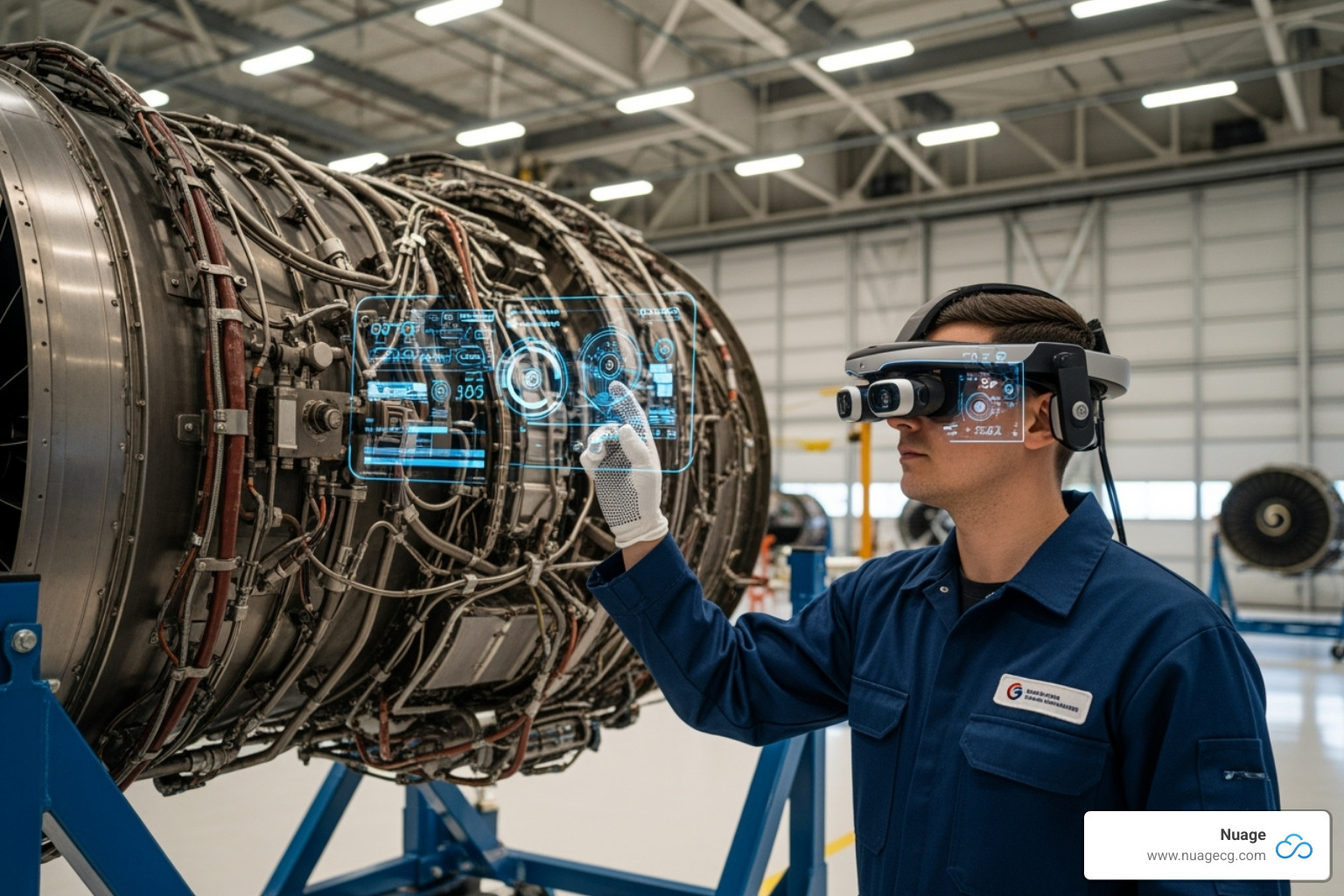
Four sectors where advanced manufacturing is widely used:
Aerospace and defense
Aerospace uses composite materials to reduce aircraft weight and 3D printing to produce complex parts as single pieces, which removes assembly steps and joints. NASA is also researching manufacturing in space for long-duration missions.
Automotive
Electric vehicle production depends on advanced processes for battery packs and lightweight structures. Automated assembly lines build different vehicle configurations on the same line, and engineers use 3D printing to test new components within days.
Pharmaceutical and medical devices
3D printing produces patient-specific implants and surgical guides shaped to an individual’s anatomy. The FDA supports continuous manufacturing for drugs, which runs production as one uninterrupted flow in place of separate batch steps. Researchers are also working on bioprinting, the 3D printing of biological material for tissue research.
Electronics and semiconductors
Electronics manufacturers rely on nanotechnology and laser machining to produce very small, precise components, and on newer processes to make flexible displays and wearable sensors.
How advanced manufacturing is changing the workforce
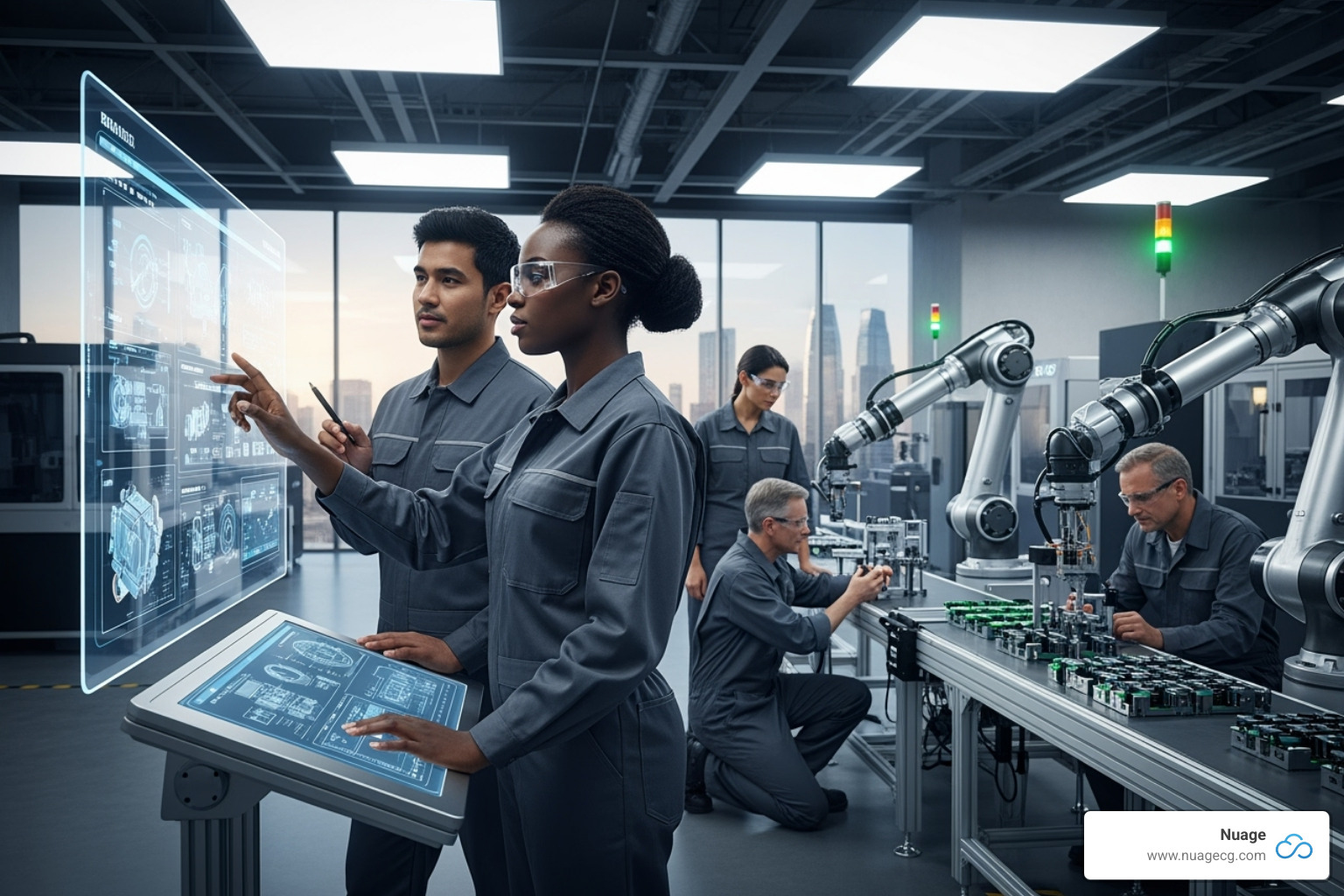
Automated plants need fewer people on repetitive tasks and more technicians who can program automated equipment and work with production data. Many of these roles are filled through skills-based hiring and community college programs that train maintenance and process technicians.
Here is how the work changes for some common roles in an advanced plant:
- Production planner: plans weeks ahead from work center capacity and supply plans held in the ERP, and adjusts the schedule when machine or order data changes.
- Maintenance technician: programs and services robots and automated equipment, and uses sensor alerts to schedule repairs before a breakdown.
- Quality inspector: sets up machine-vision inspection and investigates the parts it flags.
- Operations leader: reads production status and inventory on dashboards and uses capacity data to decide when to add a cell or a shift.
- Controller or cost accountant: costs production from what each work order actually consumed and reviews variances against standard cost.
The U.S. government treats advanced manufacturing as a matter of economic and national security. Through the Manufacturing USA network, it backs public-private institutes, including America Makes, that develop new technology and train workers. The National Science Foundation funds research, and NIST supports small manufacturers, in line with the National Strategy for Advanced Manufacturing.
What makes advanced manufacturing hard to adopt?
- Upfront cost: new equipment and software need capital, which weighs most on small and midsize manufacturers.
- Skills: people who can program robots and work with production data are hard to hire and keep.
- Security: each connected machine is another point to protect, along with the design files and production data on the network.
- Integration: new equipment has to exchange data with older machines and with the business system that plans and costs production.
- Adoption: change stalls without buy-in from the people who run the floor.
How Nuage approaches this
In recent projects, our team has worked on the business-system side of advanced manufacturing in NetSuite, from bills of materials and routings to work orders and supply planning. The Essex Finishing project described above is one example.
Stratus is our managed NetSuite service for this kind of ongoing work, described on the Stratus page.
Frequently asked questions about advanced manufacturing
Advanced manufacturing focuses on using what to design and make products?
Advanced manufacturing focuses on using innovative technology to design and make products. That includes shop floor equipment such as 3D printers and robots, and the software that plans production and records what was built. The technology improves both the product and the process that makes it.
What should people working in advanced manufacturing aim to do when designing and making new products?
They should aim to use technology to improve quality and cut waste. In practice, designers test parts with prototypes or digital models before production, and production teams use machine and inventory data to catch problems early. Designing a product with its manufacturing process in mind keeps cost and rework down once it reaches the floor.
What are examples of advanced manufacturing?
Common examples include 3D printing of aerospace parts and patient-specific medical implants, collaborative robots on assembly lines, machine-vision inspection, predictive maintenance driven by sensor data and continuous manufacturing of drugs. Each applies technology to make a product more precisely or with less waste. The industry section above covers aerospace, automotive, medical devices and electronics in more detail.
What is an advanced manufacturing process?
An advanced manufacturing process is a production method that depends on newer technology, such as additive manufacturing, laser machining, continuous drug manufacturing or automated assembly with machine-vision inspection. These processes usually produce more precise parts with less material than conventional methods, and they generate production data the business system can use for planning and costing.
What is the difference between smart manufacturing and advanced manufacturing?
Advanced manufacturing is the broad term for any innovative technology or process that improves manufacturing, whether or not the equipment is connected. Smart manufacturing is a subset: connected operations where equipment and software share data and adjust automatically. A plant running standalone 3D printers uses advanced manufacturing. A plant where machines report to a central system and adjust their own settings is also a smart factory.
About the author
Louis Balla is CRO and a partner at Nuage, a NetSuite optimization firm. Nuage has served 250+ clients since 2011 and holds a 4.9 out of 5 rating on Clutch. The delivery work described in this article was done by Nuage’s NetSuite experts.