

Why Your NetSuite Implementation Review Matters More Than You Think

A NetSuite implementation review is your roadmap to maximizing ROI from your ERP investment. While the global ERP software market is projected to reach $136 billion by 2032, over 70% of implementations fail to deliver on their promised outcomes. Businesses invest heavily in platforms like NetSuite, but many never open up the system’s full potential because they treat go-live as the finish line.
A structured review changes this. It reveals gaps, eliminates friction, and transforms your ERP from a cost center into a competitive advantage. Here’s what to evaluate:
Key Areas to Review:
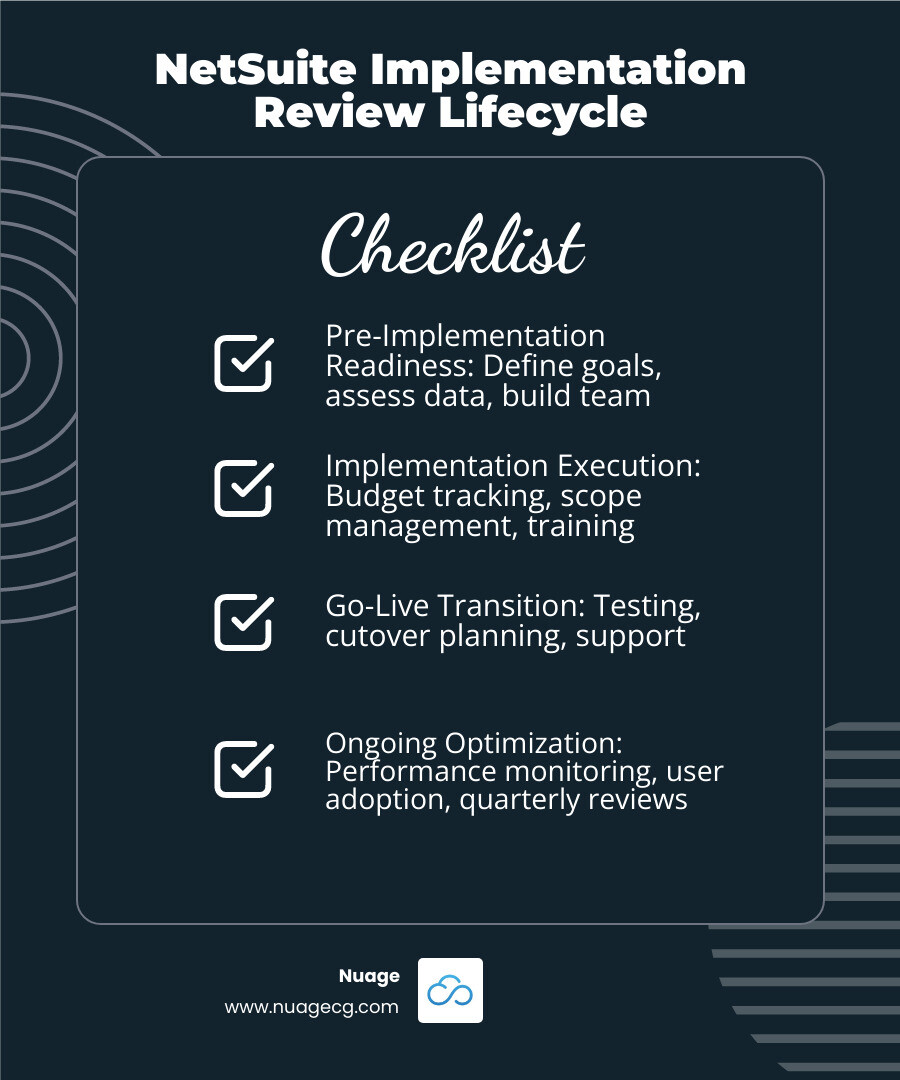
- Pre-Implementation Readiness – Clear goals, strong project team, process maturity, data cleanup
- Implementation Execution – Budget adherence, timeline management, customization scope, user training
- Post-Go-Live Performance – System efficiency, user adoption, data integrity, workflow automation
- Ongoing Optimization – Regular health checks (every 6-12 months), script performance, integration stability
Red Flags to Watch For:
- Implementation costs exceeding budget by 35%+
- User adoption below 70%
- Manual workarounds replacing system features
- Delayed or abandoned go-live dates
Companies that nail their implementation see faster close cycles and cleaner data. Those that don’t face technical debt, compliance risks, and frustrated users.
I’m Louis Balla, CRO and partner at Nuage, and I’ve spent over 15 years guiding companies through digital change and *NetSuite implementation reviews.* This guide will walk you through what to review, when to review it, and how to turn your findings into measurable business wins.
A proper review examines how well your system is running and how much value it’s delivering. Let’s start by understanding what NetSuite does exceptionally well.
Simple guide to NetSuite implementation review terms:
What to Review: Understanding NetSuite’s Strengths and Considerations

Before starting a NetSuite implementation review, it’s crucial to understand the platform’s capabilities and potential challenges. NetSuite is a comprehensive business platform, but like any powerful tool, it requires careful planning.
Core Strengths of NetSuite
NetSuite pioneered cloud ERP and its maturity shows. It’s a battle-tested platform refined over decades. Key strengths include:
- Unified Platform: Manages accounting, inventory, CRM, e-commerce, and supply chain in one system, eliminating data silos.
- Scalability: Grows with your business from a startup to a multi-million dollar enterprise without needing to be replaced.
- Global Capabilities: Supports 27 languages and over 190 currencies, with built-in consolidation for multi-subsidiary operations.
- Real-Time Visibility: Customizable dashboards provide instant access to key business metrics, from financials to sales pipelines.
- Extensive Customization: The SuiteCloud platform allows you to mold NetSuite to fit your unique business processes.
- Cloud-Native Architecture: Accessible from any browser, anywhere, without the need for server maintenance or expensive hardware upgrades.
For businesses ready to move beyond basic accounting into true enterprise resource planning, NetSuite delivers comprehensive functionality.
Key Considerations for NetSuite Implementation
A thorough NetSuite implementation review also means acknowledging potential challenges:
- Cost Complexity: Modular, subscription-based pricing can make the total cost of ownership difficult to predict. Hidden fees for licenses, customizations, or data cleanup can arise.
- Steep Learning Curve: The platform is deep and feature-rich, which can overwhelm new users. Proper training is essential for adoption.
- Significant Customization: While a strength, over-customization can lead to technical debt, making future upgrades difficult and expensive.
- Implementation Model Risks: For organizations without strong internal IT or ERP experience, partnering with a NetSuite implementation services team is critical for a smooth rollout.
- User Adoption Challenges: If the system is too complex or poorly configured, users will revert to spreadsheets and manual workarounds, undermining the investment.
Who is NetSuite For?
NetSuite is ideal for:
- Mid-Market and Scaling Companies: Businesses that have outgrown QuickBooks but aren’t ready for the cost and complexity of a tier-one ERP.
- Global Operations: Companies managing international business benefit from NetSuite OneWorld’s multi-currency, multi-language, and multi-subsidiary capabilities.
- Specific Industries: Software, wholesale distribution, retail, and light manufacturing companies can leverage industry-specific functionality for a better fit.
NetSuite serves over 42,000 businesses worldwide. The common thread is a need for unified, real-time visibility and the flexibility of a cloud-native platform. If you’re already using it but not seeing the expected value, a NetSuite implementation review is designed to fix that.
The Anatomy of a Successful NetSuite Implementation Review

A NetSuite implementation review is a continuous process, not a one-time event. A thorough review of each phase is what separates a struggling implementation from a thriving one.
Pre-Implementation: A Readiness Review for Your NetSuite Project
Success is largely determined before anyone logs into the system. A readiness review should cover:
- Organizational Readiness: Does your company have the internal bandwidth and skills to handle a major change?
- Clear Goals and Objectives: What specific pain points are you solving? What does success look like six months post-go-live?
- The Right Project Team: Assemble a team with representatives from finance, IT, and operations who have the authority to make decisions.
- Process Maturity: Understand and document your current workflows to identify inefficiencies before mapping them into NetSuite.
- Data Readiness and Cleanup: The old saying “garbage in, garbage out” is painfully true. Clean up your customer master file, prune old vendors, and standardize naming conventions before migration begins. For more, see our guide on NetSuite data migration.
- Change Management Planning: Develop strategies to get everyone on board. Proactive planning prevents common pitfalls like a lack of stakeholder involvement or insufficient training.
Budgeting and Cost Analysis
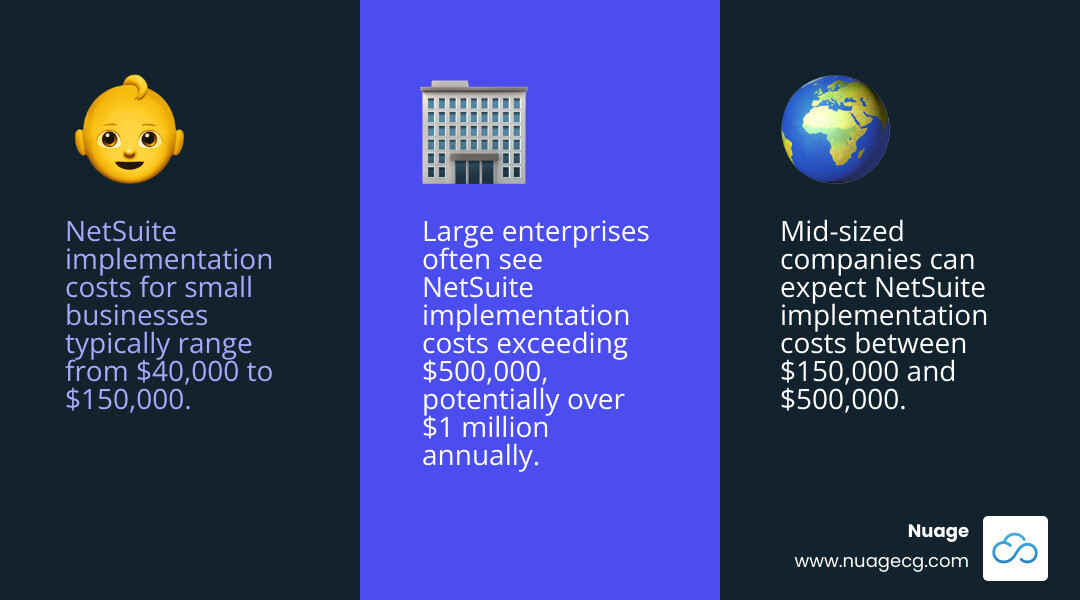
Understanding the full financial picture is critical. Your total investment is driven by licensing costs (access to software modules and user accounts) and implementation costs (planning, configuration, data migration, training, and support).
Key cost factors include:
- Modules and Users: Each additional capability and user adds to your licensing fees.
- Integrations: Connecting NetSuite to other systems like Salesforce requires skilled developers.
- Customization: Tailoring NetSuite can deliver tremendous value but can also significantly increase your budget.
- Data Migration: The quality of your existing data directly impacts migration costs. Messy data requires extensive, costly cleanup. See our NetSuite data quality guide.
Watch for hidden costs like scope changes, unplanned customizations, additional user licenses, and ongoing support and maintenance fees. We recommend budgeting smarter by defining scope early, prioritizing core functionalities, and planning for post-implementation needs.
Post-Go-Live: The Ongoing NetSuite Implementation Review and Optimization
Go-live isn’t the finish line. A robust NetSuite implementation review must continue long after the initial rollout to protect your investment. We recommend a thorough review every 6 to 12 months.
Your NetSuite optimization checklist should cover:
- System Performance: Monitor report generation speed and dashboard load times. Slow performance often indicates inefficient scripts or searches.
- User Adoption: Are people using the system as intended, or reverting to manual workarounds? Low adoption is a major red flag.
- Data Integrity: Regularly run saved searches to flag duplicate records, missing fields, or orphaned transactions to maintain NetSuite data quality.
- Customizations & Scripts: Audit and prune unused custom records, fields, and reports. Monitor script execution logs for failures or slow runs. Learn how to improve NetSuite performance.
- Roles and Permissions: Conduct regular audits to ensure proper Segregation of Duties (SoD) and that permissions align with current roles.
- Integration Health: Monitor API call volumes and sync errors to ensure smooth data flow between systems.
- Process Efficiency: Review order-to-cash and procure-to-pay processes to identify and eliminate bottlenecks.
Neglecting ongoing review leads to technical debt, compliance risks, and user frustration that undermines your entire ERP investment. Think of it as routine maintenance for a high-performance vehicle—essential for delivering maximum value year after year with your NetSuite system.
Avoiding Failure: Common Pitfalls and How to Sidestep Them

Even with a solid plan, NetSuite implementations can go sideways. The good news is that most failures follow predictable patterns, which means they are preventable.
Why Implementations Stumble
Over 70% of ERP implementations fail to deliver on their promised outcomes. This is typically an implementation problem, not a NetSuite problem. Common issues include:
- Poor Planning and Unclear Objectives: Starting a project without a clear definition of success is like steering a ship without a compass.
- Scope Creep: Small, unplanned additions to the project collectively push it over budget and past deadlines.
- Inadequate Resources: Underestimating the time commitment from your internal team or trying to implement on a shoestring budget leads to cut corners.
- Lack of Executive Buy-In: Without leadership commitment, the project lacks authority, and change management becomes nearly impossible.
- Insufficient Training: Users who don’t understand the system will find workarounds, defeating the purpose of the ERP.
- Data Migration Errors: Migrating dirty data erodes trust in the system and creates operational chaos from day one.
These failures are the result of small compromises and skipped steps. A thorough NetSuite implementation review at each phase can catch these issues before they become catastrophic.
Best Practices for a Smooth Go-Live
Avoiding failure is about following proven practices that reduce risk. These strategies consistently make the difference:
- Use Phased Rollouts: Instead of a “big bang” go-live, roll out NetSuite in manageable phases (e.g., core financials first, then inventory). This allows your team to adapt and builds confidence.
- Prioritize Native Workflows: Before customizing, ask if you can adapt your process to NetSuite’s built-in best practices. This saves time, money, and avoids technical debt.
- Conduct Comprehensive Testing: Use a sandbox environment for functional, integration, performance, and User Acceptance Testing (UAT). It’s far cheaper to fix problems before go-live.
- Ensure Strong Project Management: A dedicated project manager is needed to manage timelines, resources, communication, and scope.
- Gather Continuous User Feedback: Involve end-users early and often. Their insights are invaluable, and their involvement turns resistance into adoption.
- Invest in Post-Implementation Support: Plan for ongoing adjustments, training, and optimization reviews. Strong support during the first few weeks is critical.
- Partner with an Expert: An experienced partner like Nuage brings proven methodologies and industry knowledge. We act as your NetSuite Optimization Engine, helping you avoid common pitfalls and ensuring your system is configured to deliver maximum value. Our team of NetSuite implementation services experts helps you accelerate your path to ROI.
Frequently Asked Questions about NetSuite Implementation
We’ve guided dozens of companies through their NetSuite journey and hear the same questions repeatedly. Here are the answers to the big ones.
How long does a typical NetSuite implementation take?
The timeline varies based on complexity, modules, and customization. A general guide is:
- Small Companies: 3-4 months for straightforward projects with clean data.
- Medium-Sized Companies: 4-6 months, typically involving more complex workflows and some integrations.
- Large Enterprises: 6-12 months or longer, especially with multiple entities, extensive customization, and complex data migration.
Key factors that extend timelines are customization, data migration complexity, integrations, and the availability of your internal resources. Managing scope is the best way to keep your project on track.
What are the biggest hidden costs in a NetSuite implementation?
Expenses that appear after the initial proposal can derail a budget. Be aware of:
- Scope Changes: Change orders for new requirements add cost and time.
- Unplanned Customizations: The need for custom reports, workflows, or scripts that weren’t in the original plan.
- Complex Data Cleanup: The significant effort required to cleanse, deduplicate, and enrich messy data before migration.
- Additional User Licenses: Recurring fees for new users as your company grows or more departments adopt NetSuite.
- Post-Implementation Support: Ongoing fees for troubleshooting, optimization, and user questions.
- Third-Party Integration Maintenance: Recurring costs to maintain and update connections to other systems.
A thorough NetSuite implementation review during planning helps expose these potential costs upfront.
Can a team implement NetSuite without a consultant?
While technically possible for very simple projects, it’s rarely advisable. A successful self-implementation requires a unique combination of deep, in-house NetSuite expertise, straightforward business processes with minimal customization, and a fully dedicated internal project team.
The risks of going it alone are significant. Configuration missteps are costly to fix, you may replicate old, inefficient processes, and you’ll miss out on the industry best practices an experienced partner provides. The complexity of NetSuite and the high stakes involved make professional guidance a smart investment.
At Nuage, we’ve spent over 20 years helping companies through digital change. We’re your NetSuite Optimization Engine, here to help you select, implement, and support your environment effectively. A dedicated NetSuite implementation partner reduces risk and ensures your system becomes a strategic asset, not a source of frustration.
From Review to Reward: Maximizing Your NetSuite Investment
Think of your NetSuite implementation review as a living practice, not a one-time audit. The companies that see the biggest returns are those that treat their NetSuite system like a high-performance engine—tuning it regularly and keeping it aligned with their business goals.
Each review cycle reveals new opportunities to automate, report faster, and make smarter decisions. It’s the difference between a system that just runs and one that drives your business forward. This continuous optimization compounds over time, turning small improvements into significant business wins that show up on your bottom line.
At Nuage, we’ve spent over 20 years helping companies in Manhattan Beach, CA, Ponte Vedra, FL, and Jacksonville, FL, maximize their digital investments. We are your NetSuite Optimization Engine—a partner focused on ensuring your system evolves with your business. Our goal is to help you determine the best solutions, not just sell you software.
If you’re ready to move from simply having NetSuite to truly maximizing it, let’s talk. A well-executed NetSuite implementation review is about finding what’s possible. Together, we can turn your ERP investment into a strategic advantage. Maximize your investment with our NetSuite solutions.
Related Solutions:
Watch the NetSuite overview video