
Smart factory netsuite integration is changing how manufacturers operate, combining the intelligence of a cloud-based ERP system with the connected, automated capabilities of Industry 4.0 technologies. Here’s what you need to know:
- What it is: A smart factory uses NetSuite as its digital backbone to connect shop floor equipment, collect real-time data, and automate manufacturing processes through integrated technologies like IIoT, sensors, and advanced analytics.
- Why it matters: 95% of manufacturers worldwide are now using or assessing smart manufacturing technology—a 13% jump from just last year—making this change essential for staying competitive.
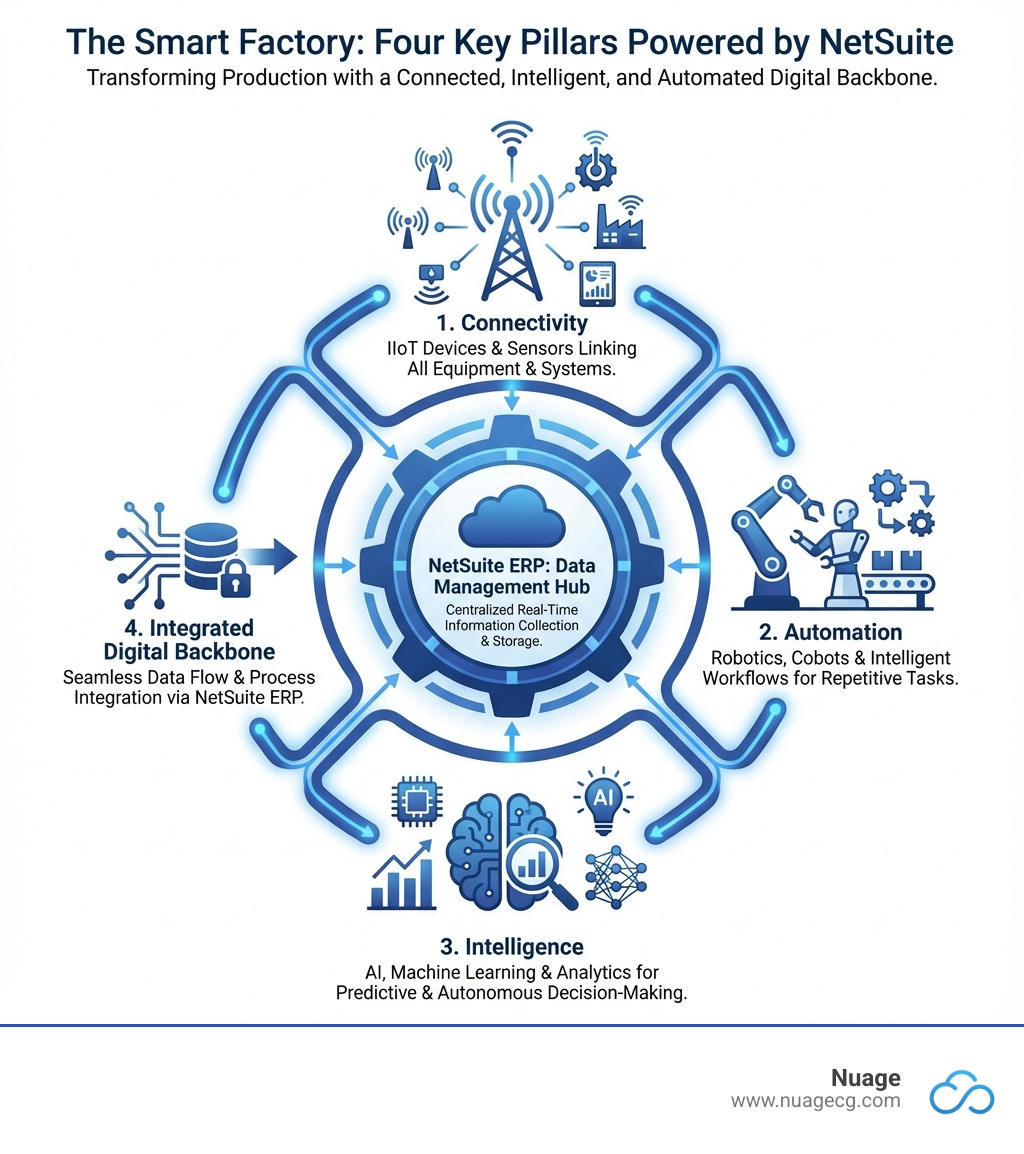
- Core components: Connectivity through IIoT, centralized data in NetSuite, automated processes, and intelligent decision-making powered by AI and machine learning.
- Key benefits: Improved equipment effectiveness, reduced downtime through predictive maintenance, 99.7% inventory accuracy (as achieved by leading manufacturers), and real-time visibility across your entire operation.
The manufacturing landscape is shifting fast. Industry 4.0 isn’t just a buzzword anymore—it’s the reality that separates industry leaders from companies struggling to keep pace. Traditional factories with disconnected systems and siloed data can’t compete with operations that have real-time visibility, predictive capabilities, and the agility to respond instantly to market changes.
Think about it: when your machines can communicate with your ERP system, when your shop floor data flows directly into production planning, and when you can predict equipment failures before they happen—that’s not futuristic thinking. That’s what smart factories are doing today with NetSuite as their foundation.
The numbers tell the story. Nearly $238 billion was spent on manufacturing equipment in 2022 alone, and 76% of manufacturers have already adopted or plan to adopt an ERP solution. But here’s the catch: most businesses only use about 20% of their NetSuite potential. The gap between basic ERP usage and true smart factory capabilities is where real competitive advantage lives.
I’m Louis Balla, CRO at Nuage, and I’ve spent over 15 years helping manufacturers bridge this exact gap through smart factory netsuite implementations and optimizations. My work building and installing third-party apps for NetSuite has given me deep insight into how manufacturers can transform their operations from automated to truly intelligent.
Smart factory netsuite terms you need:
The Anatomy of a Smart Factory: Core Technologies and Components
A smart factory is a seamlessly integrated ecosystem where the physical world of manufacturing connects with the digital world of data. This is achieved by leveraging a suite of technologies orchestrated by a powerful ERP system like NetSuite.
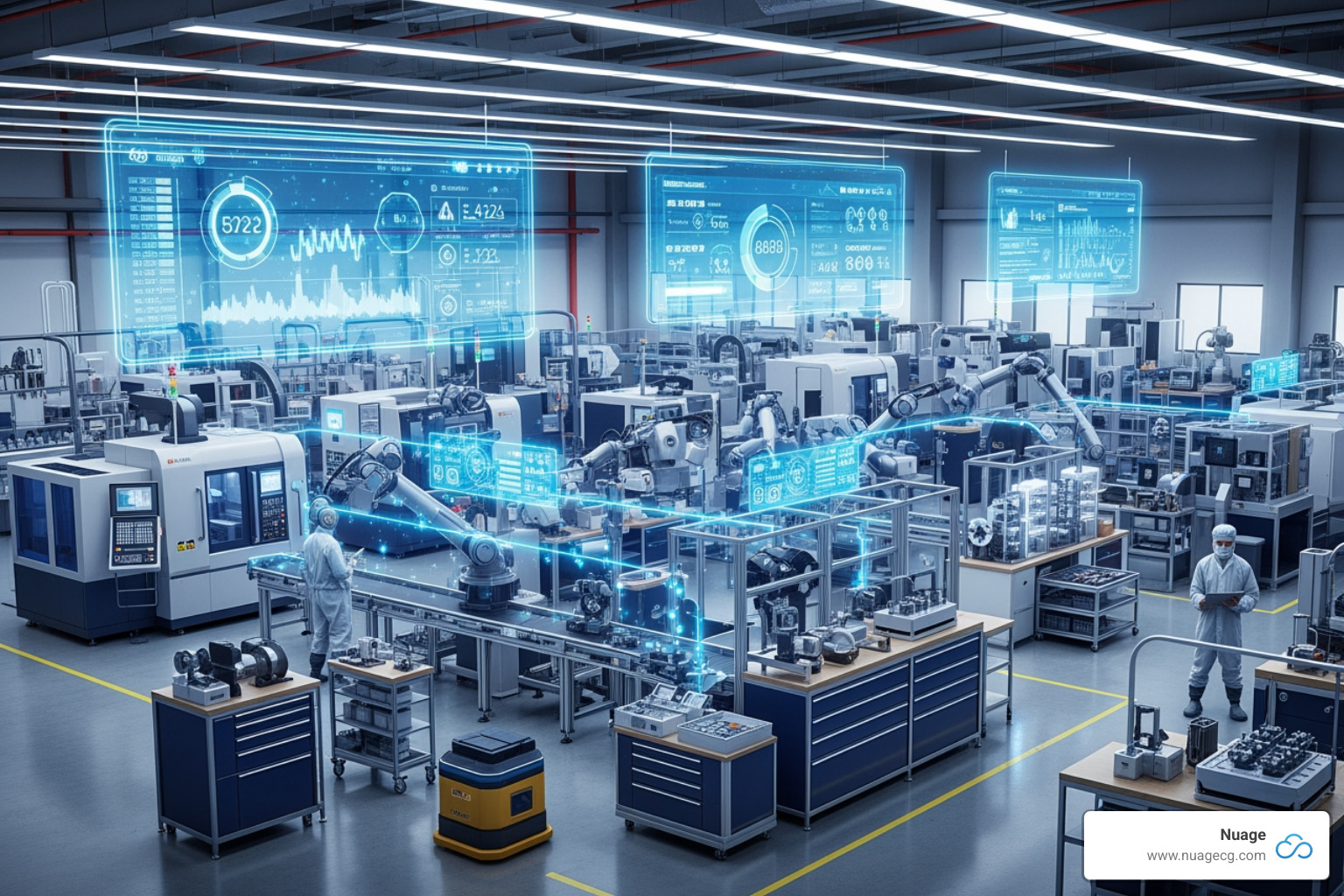
Here are the core technologies that enable a smart factory:
- Industrial Internet of Things (IIoT): The network of connected sensors, devices, and machines that enables real-time data collection and remote control of factory operations.
- Sensors: The “eyes and ears” that gather critical data from equipment, such as temperature, pressure, and vibration, to monitor performance and health.
- Artificial Intelligence (AI) and Machine Learning (ML): The brains of the operation. AI/ML algorithms analyze data to identify patterns, predict failures, optimize processes, and automate decision-making.
- Big Data Analytics: Tools that process vast amounts of data from IIoT devices to uncover actionable insights, identify inefficiencies, and support data-driven decisions.
- Robotics & Cobots: Automation of repetitive or dangerous tasks. Robots work autonomously, while collaborative robots (cobots) work alongside human employees to augment their capabilities.
- Digital Twins: Virtual replicas of physical assets or processes. They allow for risk-free simulation and testing of design changes or process optimizations.
- 3D Printing (Additive Manufacturing): Enables rapid, on-demand production of custom parts and prototypes, reducing setup costs and inventory risk. The market is projected to reach $150.2 billion by 2032.
- Cloud Computing: Provides the scalable infrastructure to store and process massive data volumes, offering agility and access to advanced applications without large on-premise hardware investments.
- Edge Computing: Processes data closer to the source (e.g., on the factory floor) for faster, real-time decision-making in time-sensitive operations, reducing latency.
Levels of Smart Factory Maturity
The path to a smart factory is a journey through four levels of maturity, as outlined by industry experts:
- Connected: The focus is on connecting equipment to collect raw data and establish a baseline of information flow.
- Analytical: Data is actively analyzed to find patterns and enable proactive measures, such as predictive maintenance to reduce downtime.
- Predictive: Systems use data to predict outcomes and suggest or initiate adjustments. For example, an algorithm might identify a potential defect and recommend a change to production parameters.
- Adaptive/Autonomous: The highest level, where systems can self-optimize and make independent decisions, running processes autonomously by adapting to real-time conditions.
Learn more about this progression in NetSuite’s What Is a Smart Factory? An Expert Guide.
Smart Manufacturing vs. Intelligent Manufacturing
While often used interchangeably, “smart” and “intelligent” manufacturing represent different stages of digital maturity.
Smart Manufacturing focuses on integrating digital technologies like IIoT and robotics to create a connected, data-rich environment. The goal is to increase efficiency, automate tasks, and improve operational visibility through data-driven insights.
Intelligent Manufacturing takes this a step further by using advanced AI and ML to create systems that can self-optimize, self-diagnose, and make independent decisions. It represents the evolution from automated to fully autonomous operations, where systems adapt without human intervention.
Here’s a quick comparison:
| Feature | Smart Manufacturing | Intelligent Manufacturing |
|---|---|---|
| Primary Goal | Optimization, automation, efficiency, data-driven insights | Autonomy, self-optimization, self-diagnosis, independent decision-making |
| Key Technologies | IIoT, sensors, big data analytics, basic AI/ML, robotics | Advanced AI/ML (deep learning, NLP, computer vision), advanced robotics, cyber-physical systems |
| Human Role | Oversight, intervention, decision-making based on insights | Guiding, managing exceptions, strategic planning, innovation |
| Process Control | Automated, optimized, real-time adjustments | Adaptive, autonomous, self-correcting |
You can dig deeper into this evolution with NetSuite’s article on What Is Intelligent Manufacturing?.
The Role of ERP in a Smart Factory NetSuite Environment
In a smart factory, the Enterprise Resource Planning (ERP) system is the central nervous system, orchestrating all operations. Without a robust ERP like NetSuite, advanced technologies operate in silos, limiting their potential. The primary role of a smart factory netsuite environment is to break down these silos by consolidating data from shop floor sensors, customer orders, and supply chains into a single source of truth.
This centralized platform enables:
- Seamless data flow between all departments and systems.
- Real-time visibility into shop floor activity, inventory, and orders for agile decision-making.
- End-to-end process optimization by identifying bottlenecks across the value chain.
- Advanced analytics by providing a unified dataset for AI and machine learning.
Effective data integration is the foundation of modern manufacturing. For a comprehensive understanding, explore The Ultimate Guide to Data Integration in Manufacturing.
How NetSuite Powers Your Smart Factory
NetSuite is a comprehensive cloud platform that manages and streamlines every facet of a manufacturing business. For a smart factory netsuite setup, its capabilities provide the core functionalities to orchestrate complex operations:
- Native & Advanced Manufacturing: NetSuite’s core and advanced modules manage bills of material, routing, work orders, and production planning. The Advanced Manufacturing module adds functionality for complex discrete manufacturing, including configurable work order logic and inspection plans to improve quality.
- Manufacturing Execution System (MES): NetSuite’s MES capabilities provide real-time information from the production line, including data on downtime, labor, scrap, and machine status for rapid adjustments.
- Work Order & Inventory Control: NetSuite streamlines the entire work order lifecycle and provides precise, real-time visibility into inventory levels across multiple locations, helping to balance supply and demand.
- Supply Chain Planning: The platform helps manage the entire supply chain, from procurement and supplier management to balancing supply and demand for timely inventory availability.
With NetSuite, manufacturers get a single, unified platform that provides a real-time snapshot of operations from R&D to production and CRM. For more information on optimizing your NetSuite environment, visit our page on NetSuite services.
Extending Capabilities for a True Smart Factory with NetSuite
While NetSuite’s native capabilities are robust, a true smart factory netsuite solution often requires extending its functionalities through partner solutions and SuiteApps. This “composable MES” approach allows for a custom solution custom to unique needs.
Key extensions include:
- Composable MES & IIoT Integration: Partners like SmartFactory™ use low-code platforms to create modular MES applications. They facilitate machine connectivity to NetSuite via IIoT platforms using standard protocols like OPC or MQTT, enabling real-time data collection.
- Shop Floor Data Collection & Barcode Scanning: Mobile devices with barcode scanning automate data capture for work orders, cycle counts, picking, and receiving, ensuring data is immediately validated and entered into NetSuite for superior inventory accuracy.
- Electronic Batch Records (eBR): For regulated industries, eBR modules provide lot traceability, recipe compliance, and e-signatures to ensure compliance with standards like 21 CFR, GxP, and GMP.
- Quality Management (CAPA): Integrated digital quality and inspection workflows ensure SOP compliance and support continuous improvement through Corrective and Preventive Actions (CAPA) processes.
By leveraging these extensions from providers like SmartFactory™, NetSuite becomes the ultimate command center for a smart manufacturing operation.
Tangible Gains: The Key Benefits of a Smart Factory Change
Embracing a smart factory netsuite approach isn’t just about adopting new technologies; it’s about opening up profound benefits that directly impact our bottom line and competitive standing. The change yields improvements across operations, quality, costs, and strategic agility.
Operational and Quality Improvements
A smart factory fundamentally changes how we operate, leading to measurable improvements:
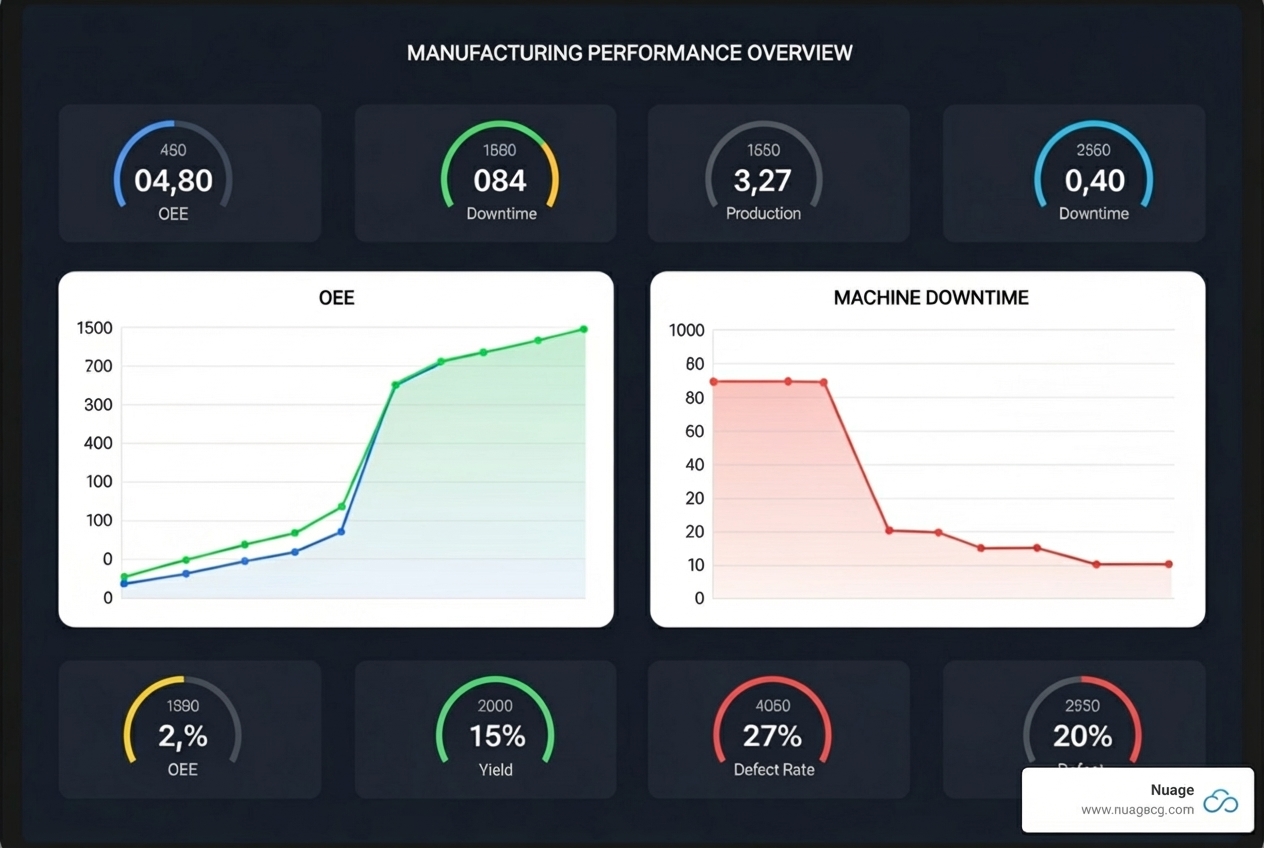
- Increased Overall Equipment Effectiveness (OEE): By continuously monitoring machine performance, identifying bottlenecks, and optimizing production schedules, smart factories significantly boost OEE. This means our equipment works smarter, not just harder.
- Reduced Downtime and Predictive Maintenance: With IIoT sensors and AI/ML analytics, we can anticipate equipment failures before they happen. This shift from reactive to predictive maintenance drastically reduces unplanned downtime, saving valuable production hours and maintenance costs.
- Improved Product Quality and Reduced Scrap/Rework: Real-time data from sensors and automated inspection systems allows for immediate adjustments to production processes. This precision leads to higher quality output, fewer defects, and a significant reduction in scrap and rework. For example, some companies have achieved an impressive 99.7% inventory accuracy by implementing smart factory solutions with NetSuite.
- Improved Traceability and Compliance: Digital records, electronic batch records (eBR), and integrated quality management systems ensure complete traceability of materials and processes. This is crucial for regulatory compliance and quick issue resolution.
Cost, Efficiency, and Strategic Advantages
Beyond operational excellence, a smart factory delivers significant financial and strategic benefits:
- Lower Operational Costs: Automation of repetitive tasks, optimized resource allocation, reduced waste, and energy efficiency all contribute to a leaner, more cost-effective operation.
- Optimized Resource Allocation and Increased Labor Productivity: Smart systems help us allocate labor and materials more effectively. While 94% of manufacturers expect to either hire additional employees or repurpose existing workers for new roles, the focus is on higher-value tasks, increasing overall labor productivity. Employees are empowered with better tools and insights, rather than being replaced.
- Improved Agility and Flexibility: Smart factories can quickly adapt to changes in demand, product designs, or supply chain disruptions. This agility allows us to respond faster to market shifts and customer needs, maintaining a competitive edge.
- Faster Response to Market Changes: With real-time insights and flexible production capabilities, we can accelerate product development cycles and bring new innovations to market more quickly.
- Fostering Innovation: The data-rich environment of a smart factory provides a fertile ground for innovation, allowing us to experiment with new processes and product designs with greater confidence.
- Sustainability Benefits: By optimizing energy use, reducing material waste, and streamlining supply chains, smart factories contribute to more eco-friendly and sustainable manufacturing practices.
A smart factory netsuite integration empowers us to not only produce goods more efficiently but also to build a more resilient, adaptable, and innovative manufacturing enterprise ready for the challenges of tomorrow.
Your Roadmap: Implementation Challenges and Best Practices
Starting on a smart factory netsuite journey is a transformative endeavor, but it’s not without its challenges. Understanding these challenges and adopting best practices is key to a successful rollout.
Navigating the Challenges of Implementation
Implementing a smart factory netsuite solution involves several common challenges:
- Initial Investment Costs: The upfront cost of hardware (sensors, robotics) and software can be substantial, but should be viewed as a long-term ROI investment.
- Data Security & Integration: Connecting factory systems to a cloud ERP introduces cybersecurity risks. Integrating new technologies with legacy equipment can also be complex.
- Skills Gap and Workforce Training: A smart factory requires new skills in data analytics and AI. 94% of manufacturers expect to hire or repurpose workers for new roles, highlighting the need for significant training to empower the workforce, not replace it.
Best Practices for a Successful Smart Factory NetSuite Rollout
To steer these challenges, we recommend these best practices:
- Start Small: Begin with a manageable pilot project to test technologies and refine your approach before a full-scale rollout.
- Define Clear Goals: Articulate what you want to achieve with measurable KPIs, such as improvements in OEE, quality, or cost.
- Prioritize Governance and Security: Establish strong data governance policies and a comprehensive cybersecurity strategy from day one.
- Invest in People: Involve employees early, provide comprehensive training, and foster collaboration across all departments—from leadership to the frontline.
- Choose Scalable Solutions: Opt for flexible, cloud-based platforms like NetSuite that can scale with your business and adapt to future technologies.
A successful change requires collaboration among key stakeholders, including executive leadership, operations, IT, engineering, quality assurance, supply chain managers, and frontline workers.
Frequently Asked Questions about Smart Factories
We often encounter common questions as manufacturers explore the potential of smart factories. Let’s address some of them.
What is the difference between a smart factory and smart manufacturing?
A smart factory is the physical facility where technologies like IIoT and AI are used. Smart manufacturing is the broader strategy of using connected data and automation across the entire manufacturing process, from design to supply chain. In short, the smart factory is a key component of the smart manufacturing strategy. Learn more in NetSuite’s guide, What Is Smart Manufacturing?.
What are the key principles of a smart factory?
The key principles of a smart factory are:
- Connectivity: Interconnecting all machines and systems via IIoT for seamless data exchange.
- Data Acquisition & Analysis: Continuously collecting data and analyzing it in a central platform like NetSuite for a unified view of operations.
- Advanced Automation: Using AI and robotics to automate tasks and optimize processes in real time.
- Human-Machine Collaboration: Augmenting human capabilities with technology, where people guide innovation and manage exceptions.
How does NetSuite connect to shop floor equipment?
NetSuite connects to shop floor equipment indirectly by orchestrating data flow through a multi-layered approach:
- IIoT Platforms & MES: These systems collect raw data directly from machines using protocols like OPC or MQTT.
- Partner Solutions & APIs: Specialized partner solutions (SuiteApps) and NetSuite’s APIs act as the bridge. They process the data from the IIoT/MES layer and push relevant transactional and operational updates into NetSuite.
This integration provides real-time visibility into production status, machine performance, and inventory, allowing NetSuite to act as the central command center without directly connecting to every sensor.
Conclusion: Build Your Future-Proof Factory with the Right Partner
The future of manufacturing is here, and it’s smart. The integration of advanced technologies within a smart factory netsuite environment offers unparalleled opportunities for efficiency, quality, and competitive advantage. We’ve seen how a smart factory can boost OEE, slash downtime, ensure near-perfect inventory accuracy, and drive significant cost savings, all while fostering innovation and sustainability.
At the heart of this change is a powerful, integrated ERP system. NetSuite provides the foundational capabilities—from order management and inventory control to supply chain planning and MES functionalities—that orchestrate the complex operations of a connected factory. When extended with specialized partner solutions for IIoT integration, shop floor data collection, and advanced quality management, NetSuite truly empowers us to build a future-proof manufacturing enterprise.
However, navigating this digital change requires expertise. The path to a smart factory involves overcoming challenges like initial investments, integration complexity, and developing new workforce skills. This is where a strategic partner becomes invaluable.
With over 20 years of experience in digital change, we at Nuage act as your NetSuite Optimization Engine. We don’t just sell software; we work with you to determine the right solutions, implement them seamlessly, and provide ongoing support to ensure your NetSuite environment is optimized for your smart factory ambitions. Our goal is to help you bridge the gap between basic ERP usage and the full potential of a truly intelligent manufacturing operation.
Ready to open up the power of a smart factory netsuite integration for your business? Let us help you chart a course for success.